

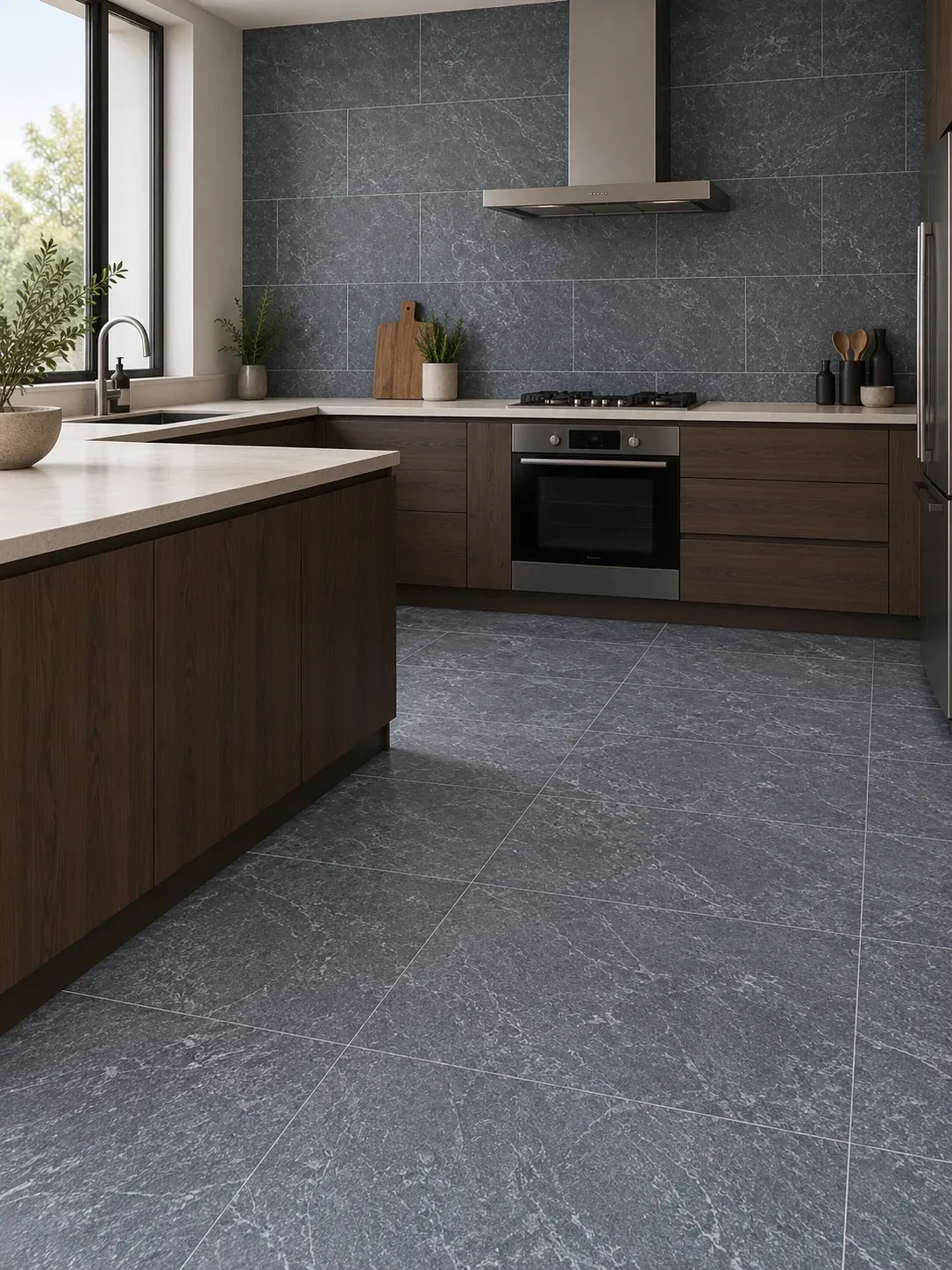
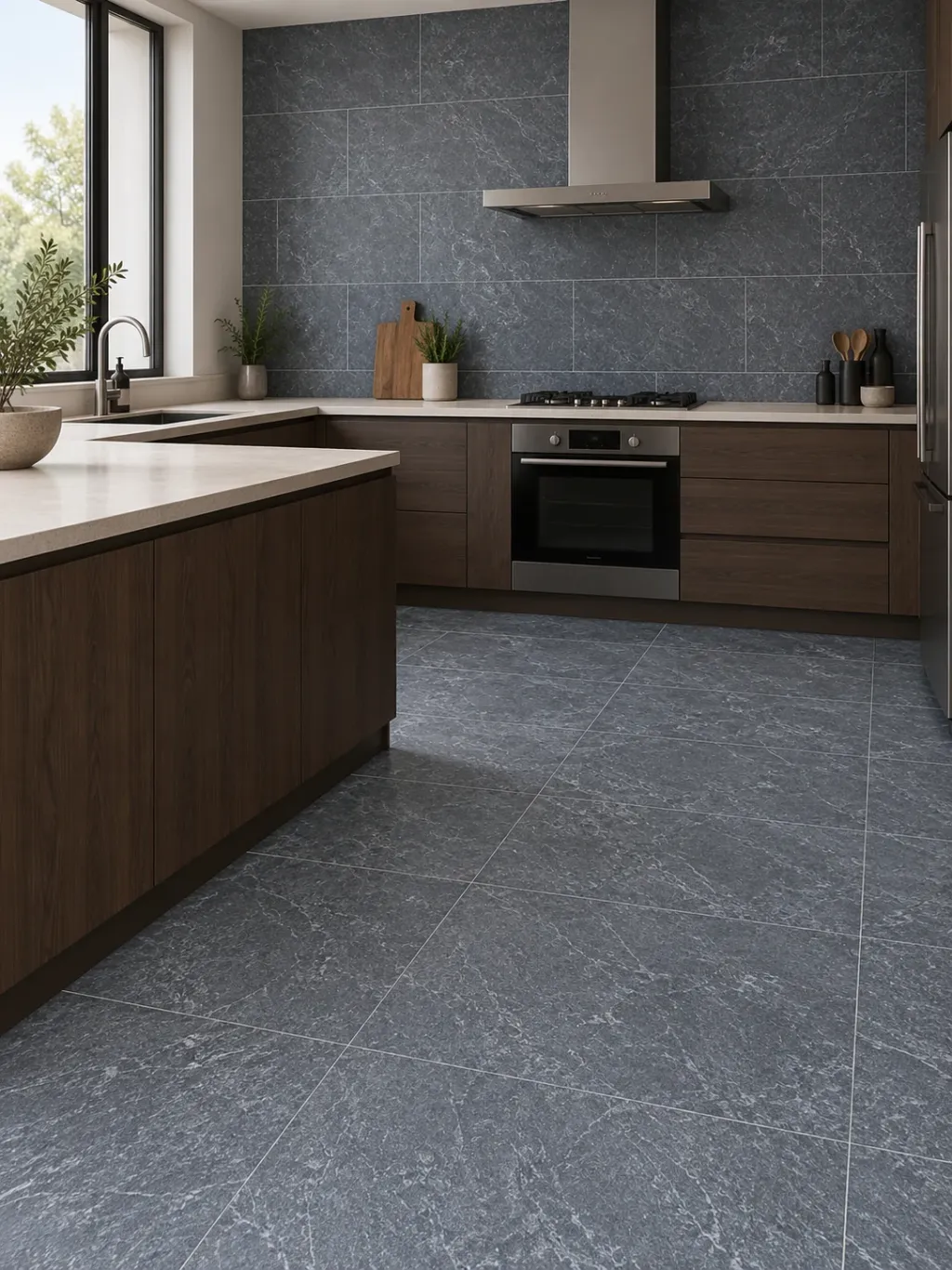
120 x 60 cm tiles suit most kitchens, open-plan living areas and medium to large bathrooms. One tile covers 0.72 m², so you need about 1.39 tiles per m², and there are far fewer grout lines to clean. The trade-offs are real, though: a large tile needs a very flat base, full adhesive coverage, two people to carry it and a fitter used to the size. In a tiny room full of cuts, a smaller tile is often the better buy.
This guide sets out the maths, the pros and cons, when to choose something smaller and what to talk through with your fitter. If you have already decided, browse our large format tiles.
How many 120 x 60 tiles per m²?
One 120 x 60 cm tile measures 1.2 m by 0.6 m, so it covers 0.72 m². That works out at about 1.39 tiles per m² (1 divided by 0.72).
Our 120 x 60 cm tiles come 2 to a box, so each box covers 1.44 m². A full pallet holds 27 boxes: 54 tiles, or 38.88 m².
A worked example for a 12 m² kitchen floor:
- 12 m² divided by 0.72 m² is 16.7 tiles before cuts.
- Add around 10% for cuts and breakages: 13.2 m².
- 13.2 m² divided by 1.44 m² per box is 9.2, so order 10 boxes (20 tiles, 14.4 m²).
The calculator on each product page does this sum for you. With large tiles, waste depends on the shape of the room more than its area, so an L-shaped room or one with several doorways may need more than 10%.
The pros of 120 x 60 tiles
- Fewer grout lines. A 120 x 60 cm grid has about 2.5 m of joint per m², half that of a 30 x 60 cm tile. That means less grout to clean around the cooker, the sink and the back door.
- A calmer room that looks larger. Fewer lines break up the floor, so it reads as one surface. This is why the format suits open-plan kitchens and living spaces. See all our kitchen tiles.
- The pattern has room to show. On a stone effect tile, the texture and veining run across a large face instead of stopping every 30 cm.
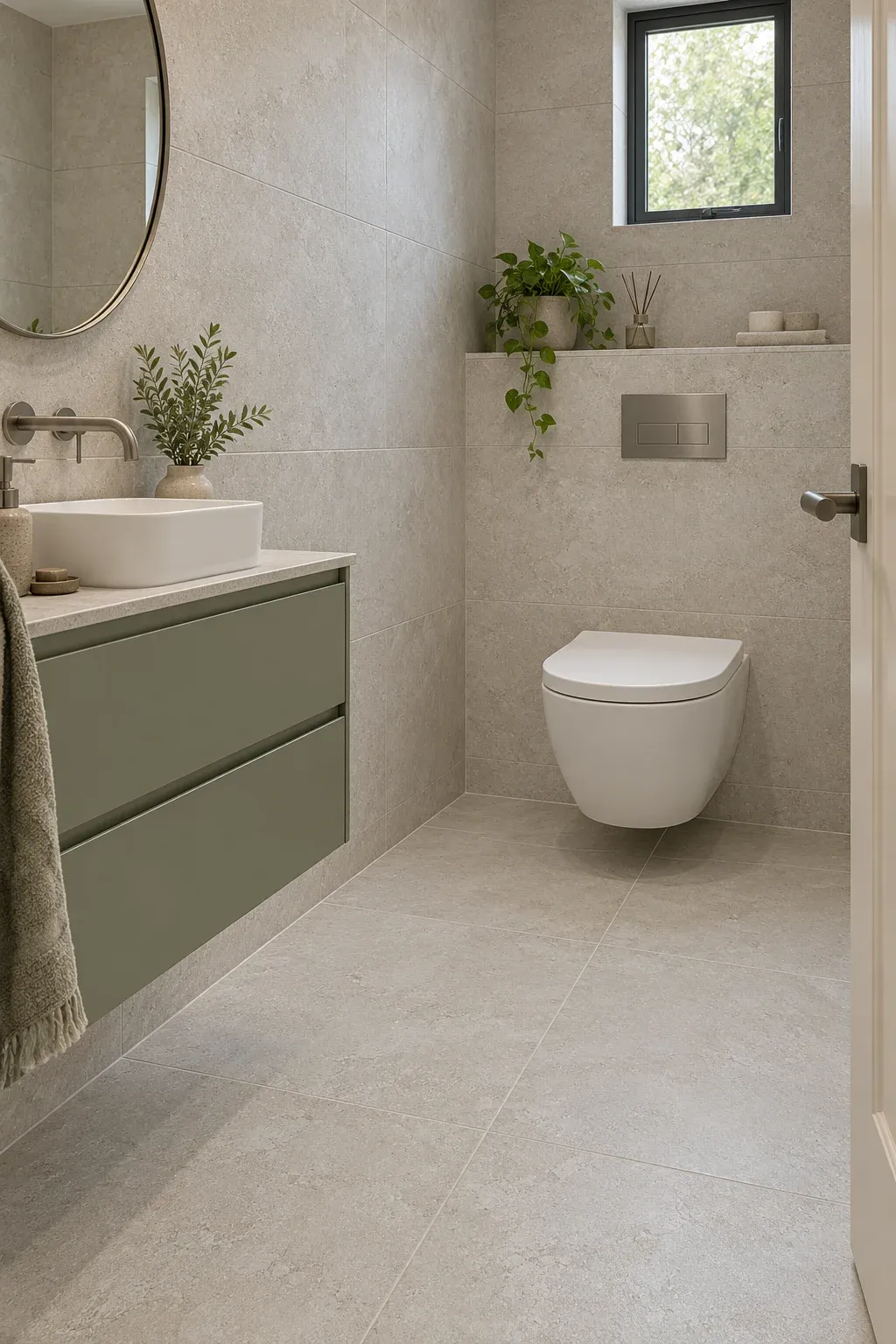
- Floor to wall in one tile. Our 120 x 60 cm tiles are made for floors and walls, so the same tile can run up a kitchen wall or round a bathroom.
Every Marvra tile is 11 mm rectified porcelain, classified BIa with water absorption of 0.5% or less, and tested to BS EN 14411. Rectified means the edges are cut square after firing, so the joints can be kept narrow. Porcelain this dense needs no sealing. The 120 x 60 cm tiles in stock are listed as suitable for underfloor heating; follow the heating system maker's guidance.
The cons, and when 120 x 60 is not the right choice
Small rooms with many cuts
A cloakroom or small en suite packs a toilet, pipes, a door frame and often a radiator into a few square metres. Every obstacle means a cut, and with a large tile each cut can waste a big piece. When most tiles are cut on two or three sides, you lose the main benefit of the format, which is the large uncut face.
Uneven floors
A long, flat tile shows every dip and hump. Over an uneven floor you can get hollow spots under the tile and lippage, where one tile edge sits higher than its neighbour. Old timber floors and uneven screeds usually need levelling or overboarding first.
A small budget for preparation
The tile price is only part of the cost. Large formats usually need a levelled base, more adhesive, levelling clips and a fitter used to the size, and many fitters price large formats higher per m². If the floor needs work and the budget will not stretch to it, a smaller tile is the more forgiving choice. Get a fitting quote before you choose the format.
Shower floors and falls
A walk-in shower floor has to fall towards the drain, and a large flat tile cannot follow a fall in two directions. Shower areas usually need a smaller tile or a linear drain. Ask us before you order for any wet area.
Handling and access
A 120 x 60 cm tile needs two people to carry and lay. Pallets are delivered kerbside and someone must be there to take them in, so plan the carry from the kerb, and check that narrow stairs or a tight hallway will not get in the way.
120 x 60 vs 60 x 60 vs 30 x 60
| 120 x 60 cm | 60 x 60 cm | 30 x 60 cm | |
|---|---|---|---|
| Area per tile | 0.72 m² | 0.36 m² | 0.18 m² |
| Tiles per m² | about 1.39 | about 2.78 | about 5.56 |
| Joint length per m² (straight grid) | about 2.5 m | about 3.3 m | about 5 m |
| Cuts around obstacles | Fewer cuts, but bigger offcuts | In between | Easiest around sockets and pipes |
| Floor flatness needed | Least forgiving | In between | Most forgiving |
| Handling | Two people | One person | One person |
| Best for | Open-plan floors, kitchens, larger bathrooms, feature walls | Square rooms and hallways | Splashbacks, cloakrooms, small bathrooms |
The joint figures assume a straight grid and ignore the room edges: they compare formats, they are not a grout order. We sell 120 x 60, 40 x 90 and 30 x 60 cm tiles; 60 x 60 cm is in the table for comparison only.
Are 120 x 60 tiles good for small rooms?
Often, yes, as long as the room is simple. A small kitchen or bathroom with a clear, rectangular floor can look larger in 120 x 60 cm tiles, because there are fewer lines to break it up. Running the same tile up the walls helps even more.
They suit small rooms less when there are many obstacles, when the width leaves a thin cut strip along one wall, or when a shower floor falls to a drain. A quick test: sketch the floor to scale and draw 120 x 60 cm rectangles on it. If most tiles stay whole or nearly whole, the format works. If most are cut, choose a smaller format, such as the 30 x 60 cm tiles covered in our travertine vs travertine effect porcelain guide.
Fitting tips for 120 x 60 tiles
Every job is different, so follow your fitter and the adhesive maker's instructions. These general points are worth talking through before work starts:
- A flat substrate. Large formats need a flatter base than small tiles. Your fitter will check the floor with a long straight edge and level it where needed.
- Full adhesive coverage. Large tiles are usually back-buttered, with adhesive on the floor and a thin coat on the back of the tile, so there are no hollow spots that could crack later. Ask for a flexible adhesive suited to large format porcelain, especially over underfloor heating.
- Levelling clips. A clip system holds neighbouring edges at the same height while the adhesive sets, which helps keep lippage down.
- Offset no more than a third. A half-bond stagger on long tiles can show lippage at the middle of each tile. Many fitters limit the offset to a third of the tile length, or lay a straight grid.
- Two-person handling. Carry and set each tile with two people, and keep it supported along its length so it does not flex.
- Lay out dry and mix boxes. Open several boxes and lay a few tiles out before fixing to see the variation, and order everything at once so the tiles come from the same batch.
- Narrow joints, matching grout. Rectified edges allow narrow joints, and a grout close to the tile colour keeps the floor reading as one surface. Your fitter sets the joint width.
Our 120 x 60 cm range is 11 mm tile for indoor walls and floors. A patio or garden path needs thicker exterior porcelain, so ask us before using any tile outside.
Which 120 x 60 tiles are in stock?
Two 120 x 60 cm tiles are in stock now, both stone effect in a full matt finish:
- Harrat Anthracite. A deep, near-black stone effect with a natural texture. Dark floors hide everyday marks, which makes it a practical choice for kitchens and hallways.
- Harrat Silver. A mineral grey stone effect with a subtle texture, lighter and calmer, good for keeping a room bright.
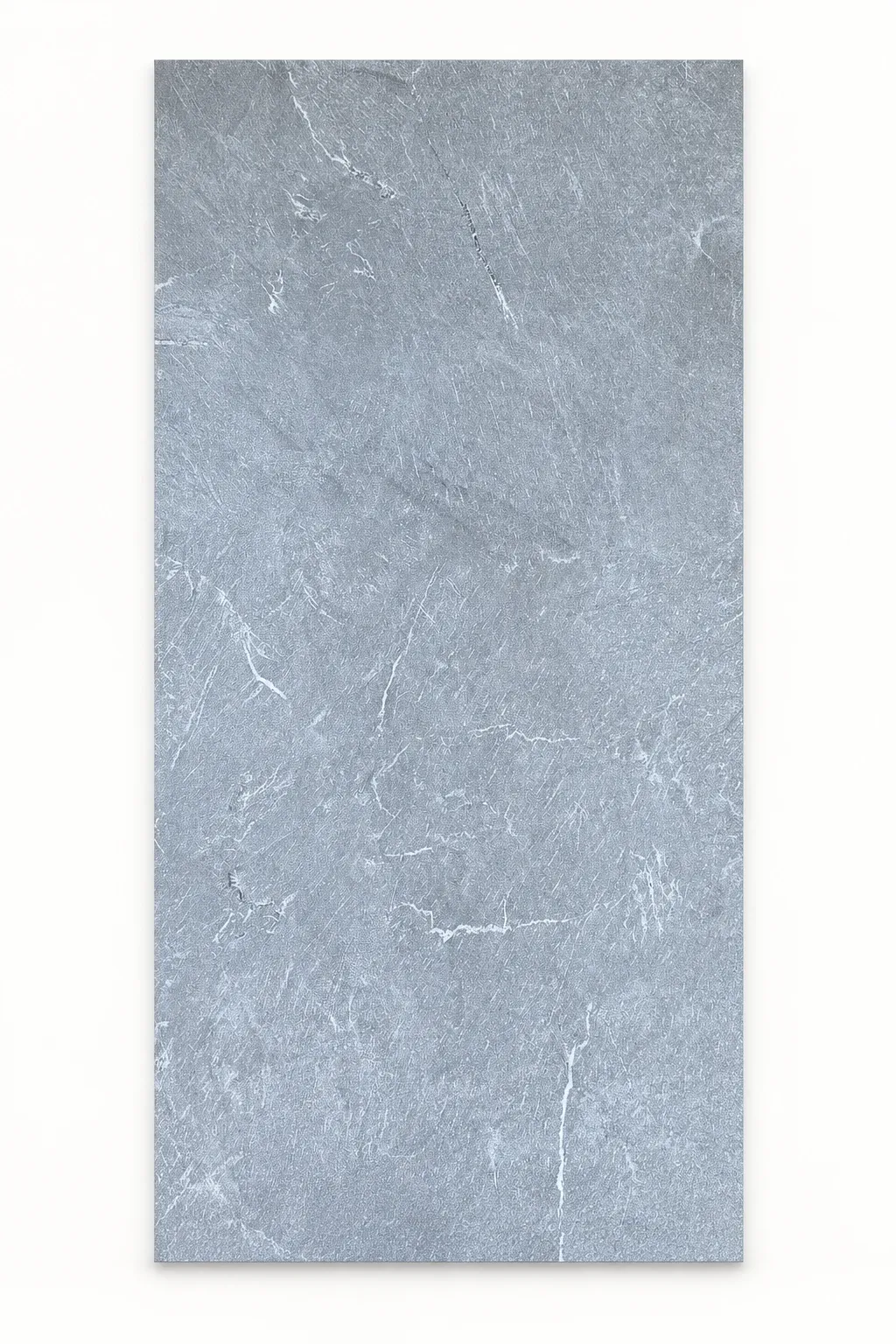
Both are £22.45 per m² (was £26.95), which is £16.16 per tile or £32.33 per box of 1.44 m². Prices in October 2026. For a larger floor, you can buy by the pallet: the Harrat Anthracite pallet and the Harrat Silver pallet are 38.88 m² each at £806.00 inc VAT, or £20.73 per m², with free UK delivery. Pallets are limited, so check what is left on each page. Our other 120 x 60 cm tiles are out of stock at the time of writing; current stock is shown on each tile.
See the tiles before you order
Order a sample for £1.99. Samples are 10 x 10 cm, you can choose up to 10 shades, and the cost is credited back against your tile order. A sample shows colour and finish, not the scale of a full tile, so for that, visit our showroom at 20a Western Avenue, London W3 7TZ or ask us for photos of a full tile. Opening hours, phone and WhatsApp are on our contact page.
Tiles are delivered in 1 to 3 days on a pallet. UK delivery is free on product orders over £349 and £89.95 below, and you can pay in 3 with Klarna. Ready to choose? Browse all our large format tiles.
Your questions
How many 120 x 60 tiles are in 1 m²?
About 1.39. Each 120 x 60 cm tile covers 0.72 m², and 1 divided by 0.72 is 1.39. Our 120 x 60 cm tiles come 2 to a box, so one box covers 1.44 m². Order by the box and add around 10% for cuts and breakages.
Are 120 x 60 tiles good for small rooms?
Often, yes, in a simple rectangular room: fewer grout lines make a small kitchen or bathroom look larger. In a room with many obstacles, a narrow width or a shower floor that falls to a drain, most tiles end up cut, and a smaller format such as 30 x 60 cm is usually the better choice.
What are the disadvantages of 120 x 60 tiles?
They need a very flat base, full adhesive coverage, levelling clips, two people to carry them and a fitter used to the size, so preparation and fitting can cost more. In rooms with many obstacles they also mean more cuts and more waste.
Do 120 x 60 tiles make a room look bigger?
Yes. Fewer joints mean fewer lines breaking up the floor or wall, so the surface reads as one piece and the room feels larger.
What offset should I use for 120 x 60 tiles?
Many fitters limit the offset on long tiles to a third of the tile length, or lay a straight grid, because a half-bond stagger can show lippage. Follow your fitter and the adhesive maker's instructions.
Can 120 x 60 tiles go on walls?
Yes. Our 120 x 60 cm porcelain tiles are made for floors and walls. Ask your fitter for an adhesive suited to large format porcelain on walls.
Can 120 x 60 porcelain tiles be used outside?
Our 120 x 60 cm range is 11 mm tile for indoor walls and floors. Outdoor paving needs thicker exterior porcelain, so ask us before using any tile outside.
Can I see a 120 x 60 tile before ordering?
Yes. Samples cost £1.99 each, credited back against your tile order, or visit our showroom in London W3. Full tile orders are delivered in 1 to 3 days.