

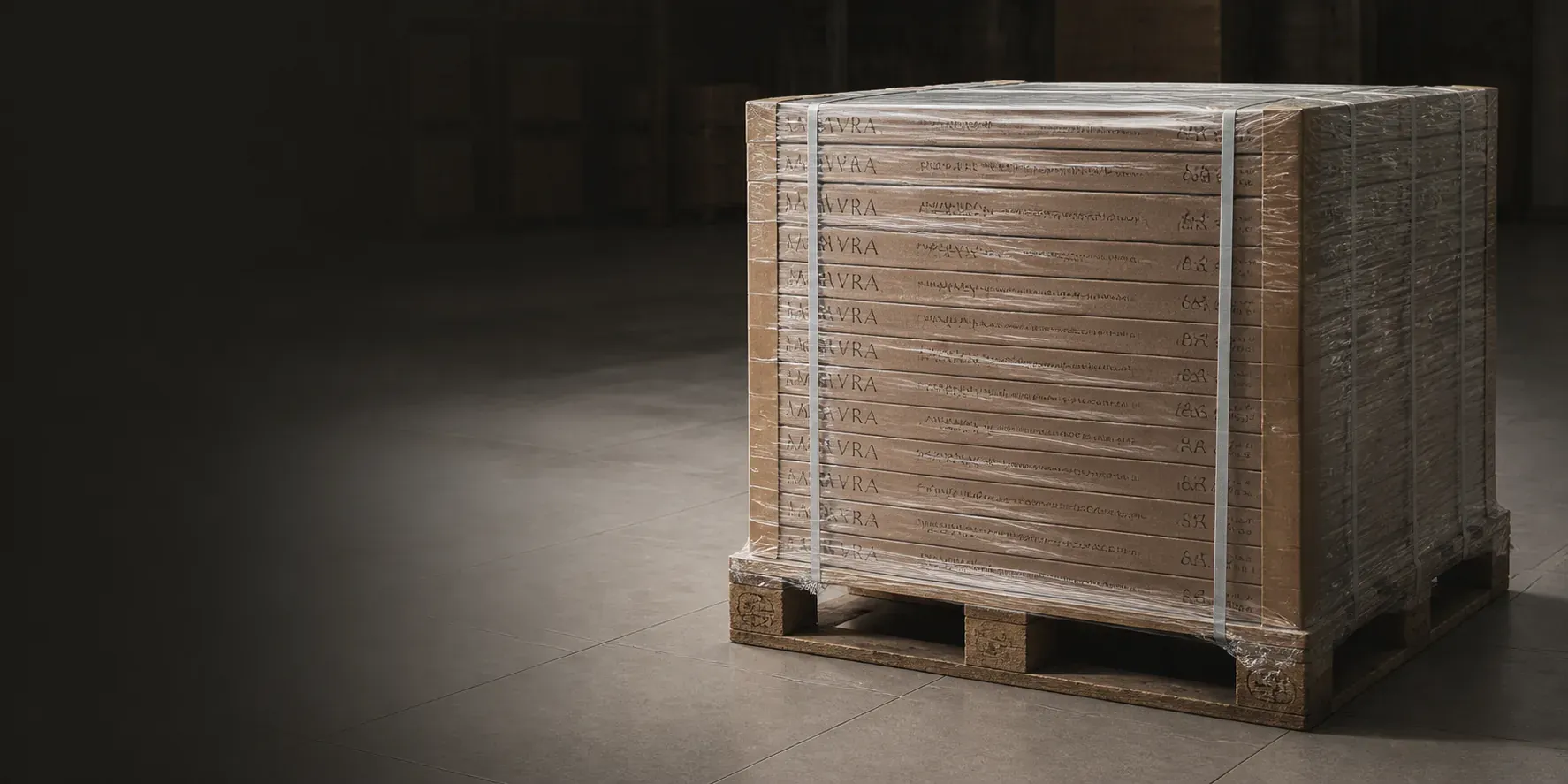
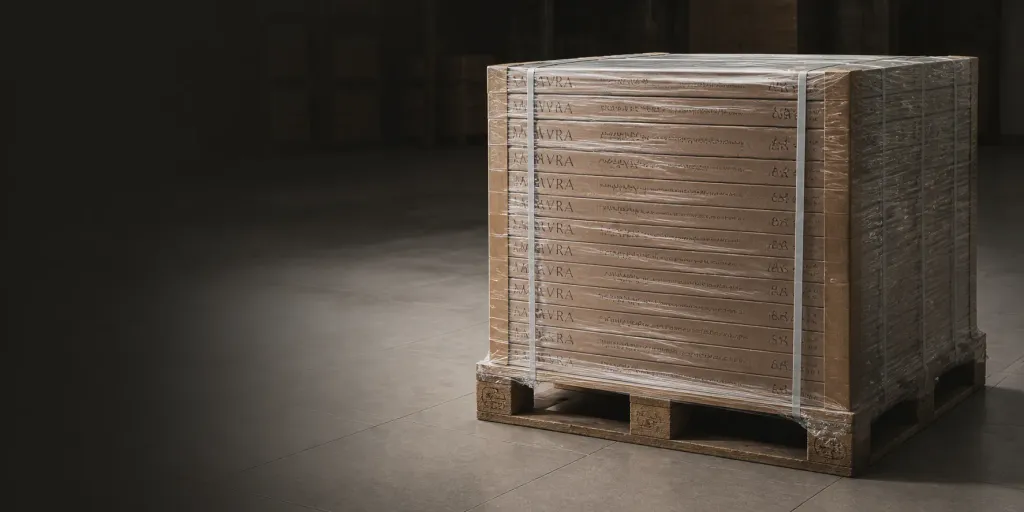
To work out how many tiles you need, measure the floor in square metres, add a cutting allowance for your layout (about 10 % for straight, 15 % for diagonal, 25 % for herringbone), and divide by the coverage of one box. If the result comes close to a full pallet, compare the pallet price with the boxes: a pallet is one batch, so the shade matches across the floor.
The calculator below does all three steps with the real box and pallet sizes of our tiles. For more on pallets, see how many m² are on a pallet of tiles.
How to measure the room
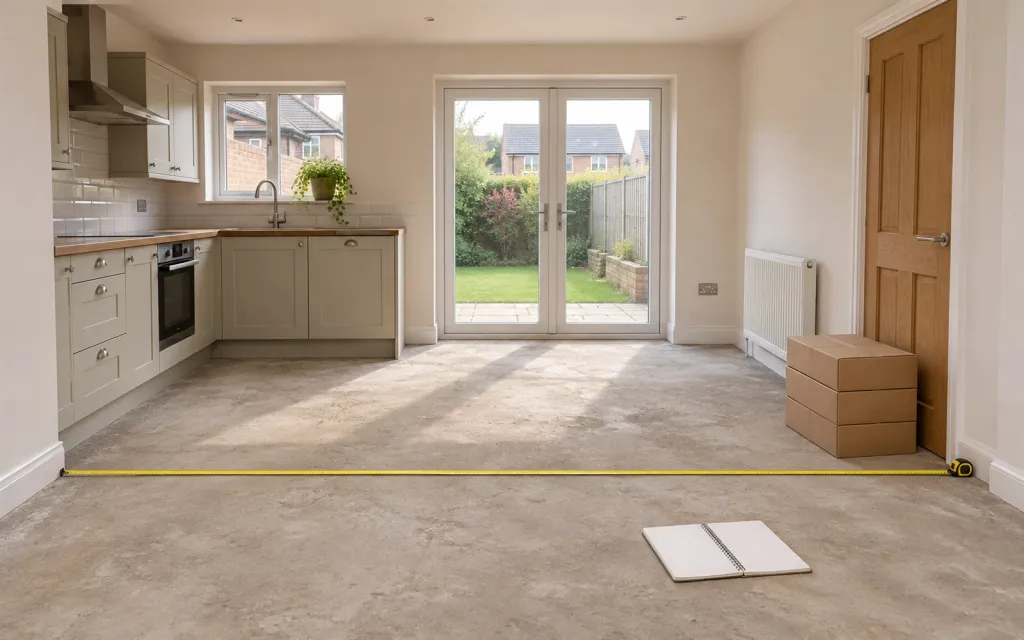
Measure the length and width of the floor in metres, at the widest points, and multiply them. A room of 4 m by 3.5 m is 14 m². For an L-shaped room, split it into two rectangles and add them up. Measure into door openings and alcoves where the tile will go.
In a kitchen, decide first whether the tiles run under the units. Tiling the whole floor costs more tile, but you can move or replace units later without a gap in the floor.
How much extra to order
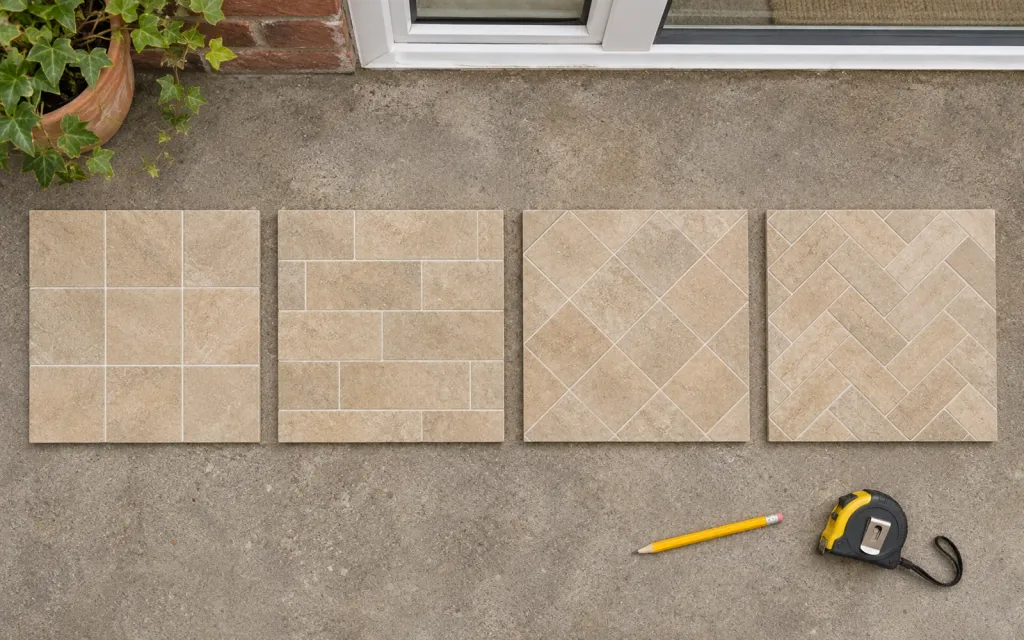
Tiles are cut at the walls, around doorways and around anything fixed to the floor, and some cuts break. The cutting allowance depends on how the tiles are laid:
| Layout | Add | Why |
|---|---|---|
| Straight lay | about 10 % | Cuts only at the edges of the room. |
| Brick bond (offset) | about 10 % | Each row starts with a half tile, used at the other end. |
| Diagonal | about 15 % | Every edge tile is cut on an angle. |
| Herringbone | about 25 % | Many short cuts along every wall. |
| Many corners or pipes | add 5 % more | Each obstacle costs a tile or two. |
Large tiles have fewer joints but each cut wastes more tile, so in a small room with many corners lean to the higher figure.
Boxes or a full pallet?
Tiles are sold by the box, and some of our tiles also by the full pallet. A pallet holds 38.88 m² of 120 x 60 cm or 30 x 60 cm tiles, or 37.8 m² of our 40 x 90 cm Ascoli. When your order with cutting allowance reaches most of a pallet, compare the two prices on the pallet deals page. Every tile on a pallet comes from one batch, so the shade matches across a large floor.
The three sizes, side by side
What each size does in a room, and how it is packed.
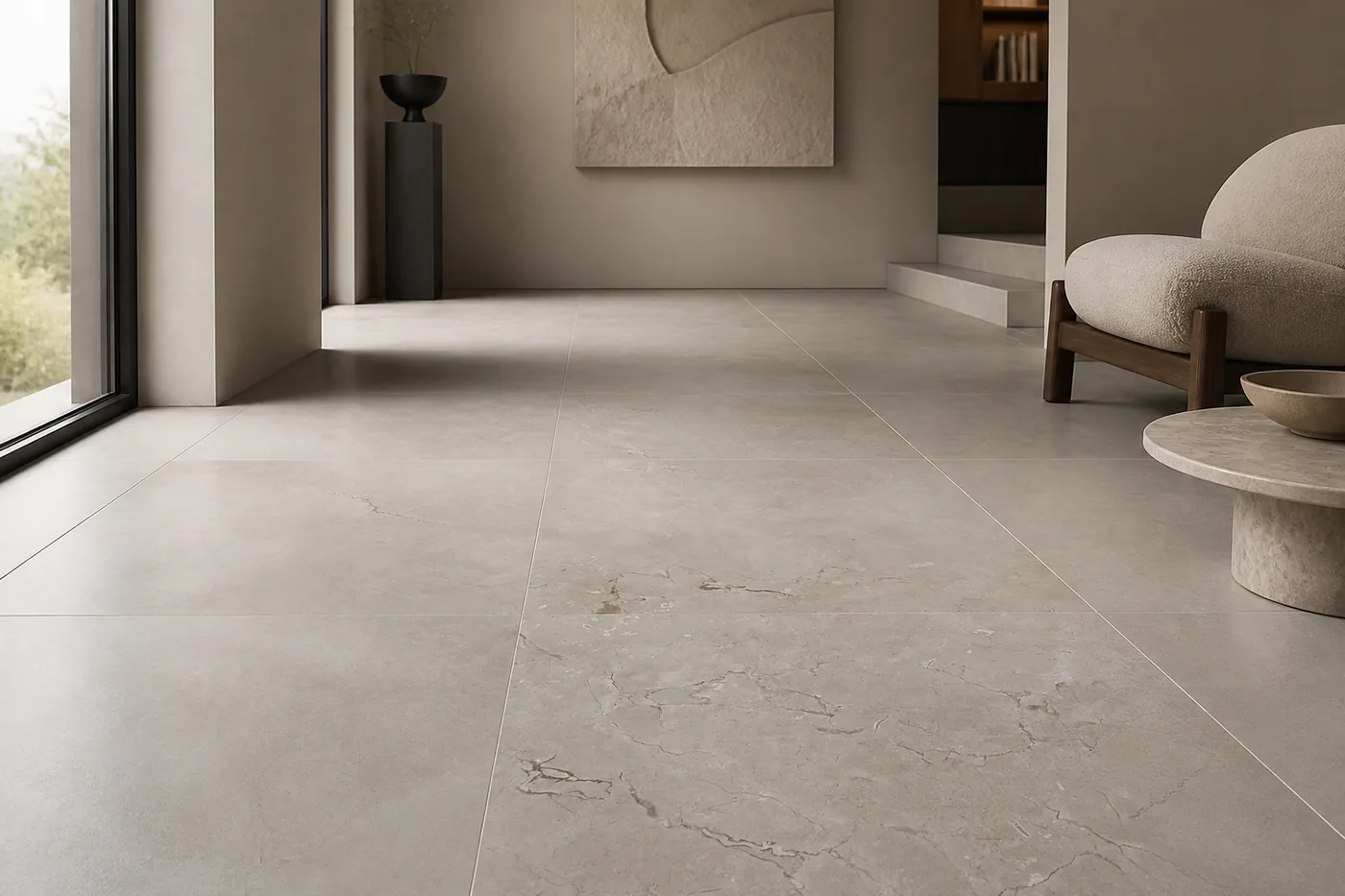
120 x 60 cm
Large format: few joints, so the floor reads as one surface. Best in big rooms, open-plan kitchens and living areas.
- Per box:
- 2 tiles, 1.44 m²
- Per pallet:
- 27 boxes, 38.88 m²
Before you order
Not sure which tile yet? Order samples at £1.99 each, or browse all our porcelain tiles.